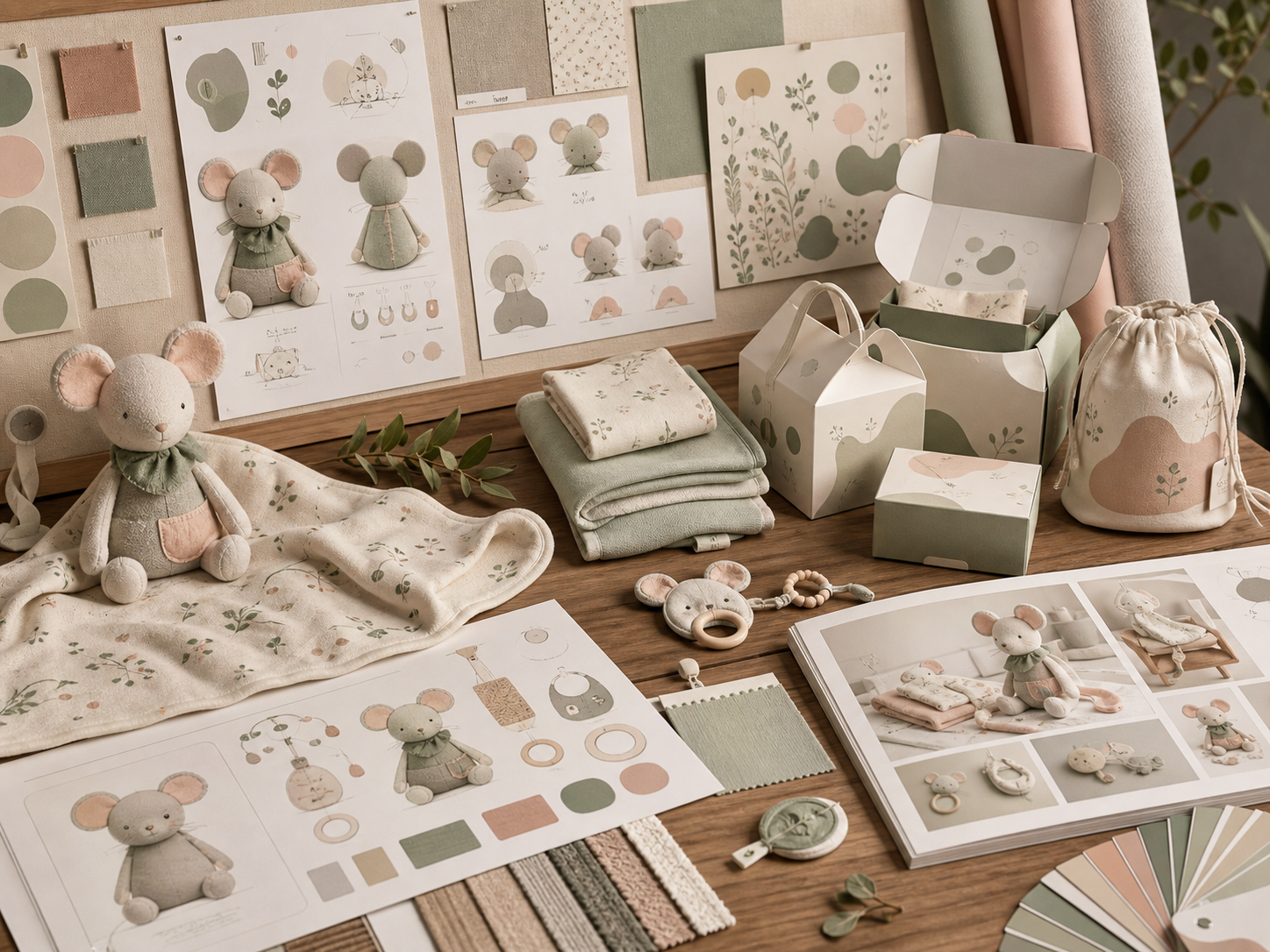
Character first, product second
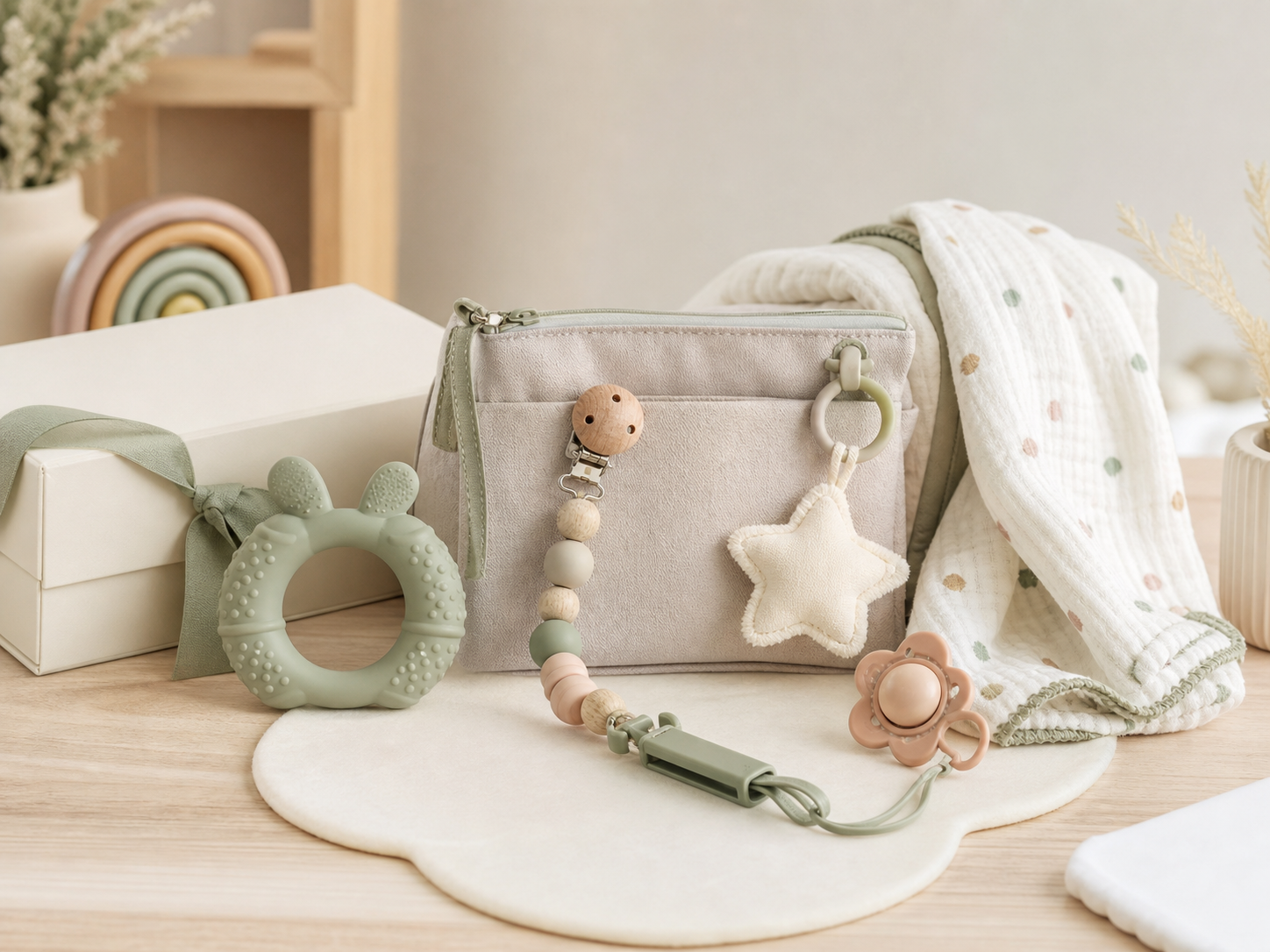
The strength of textile craft goods is not a stack of specifications, but touch, companionship and detail. Mimi Mouse, Anan Hug and Dodo Helper can stand for three scenarios: soothing sleep, daily comfort and outing organization. Once the character logic is clear, the line can extend beyond plush toys into rattles, charms, organizers, gift-set liners and product-page illustrations.
What a series should unify
Fabric and touch
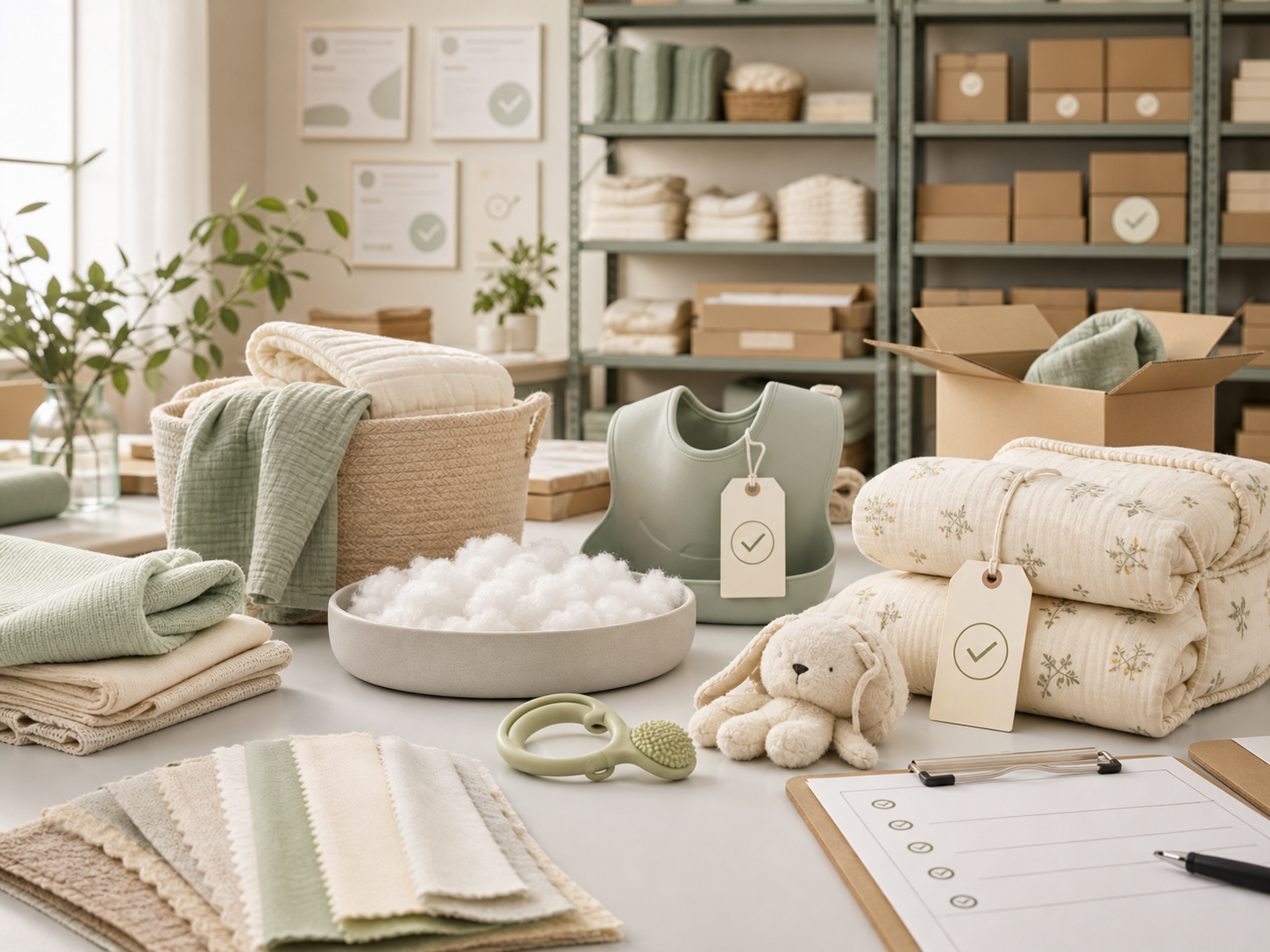
Comfort products should describe skin-friendly fabrics, filling loft, washing methods and age fit. Do not only say soft. Explain where softness comes from: plush surface, cotton cloth, knit texture, binding, filling or size.
Stitching and structure
The biggest risk for textile goods is looking cute but feeling fragile. Add close-ups of stitching, edge binding, cord connection points and removable parts. For wholesale customers, craft-detail comparison images reduce back-and-forth communication.
Characters and patterns
Use three visual layers: main characters for gift boxes and hero images, secondary motifs for liners and stickers, and low-density patterns for bibs, blankets and wrapping paper. This keeps the series consistent without becoming repetitive.
Packaging and display
Small launches can start with hang tags, stickers and belly bands; mature lines can add boxes, bags and display cards. For live commerce, retail and cross-border platforms, a clear packaging system often builds more trust than a single polished hero image.
How Muma can execute
Muma can organize textile craft products by character, scenario and packaging: each character owns a main color, material keyword, use case and replaceable small items. New launches, wholesale replenishment, holiday gift sets and co-branded projects can all reuse the same asset system.