Why parents repeatedly check materials
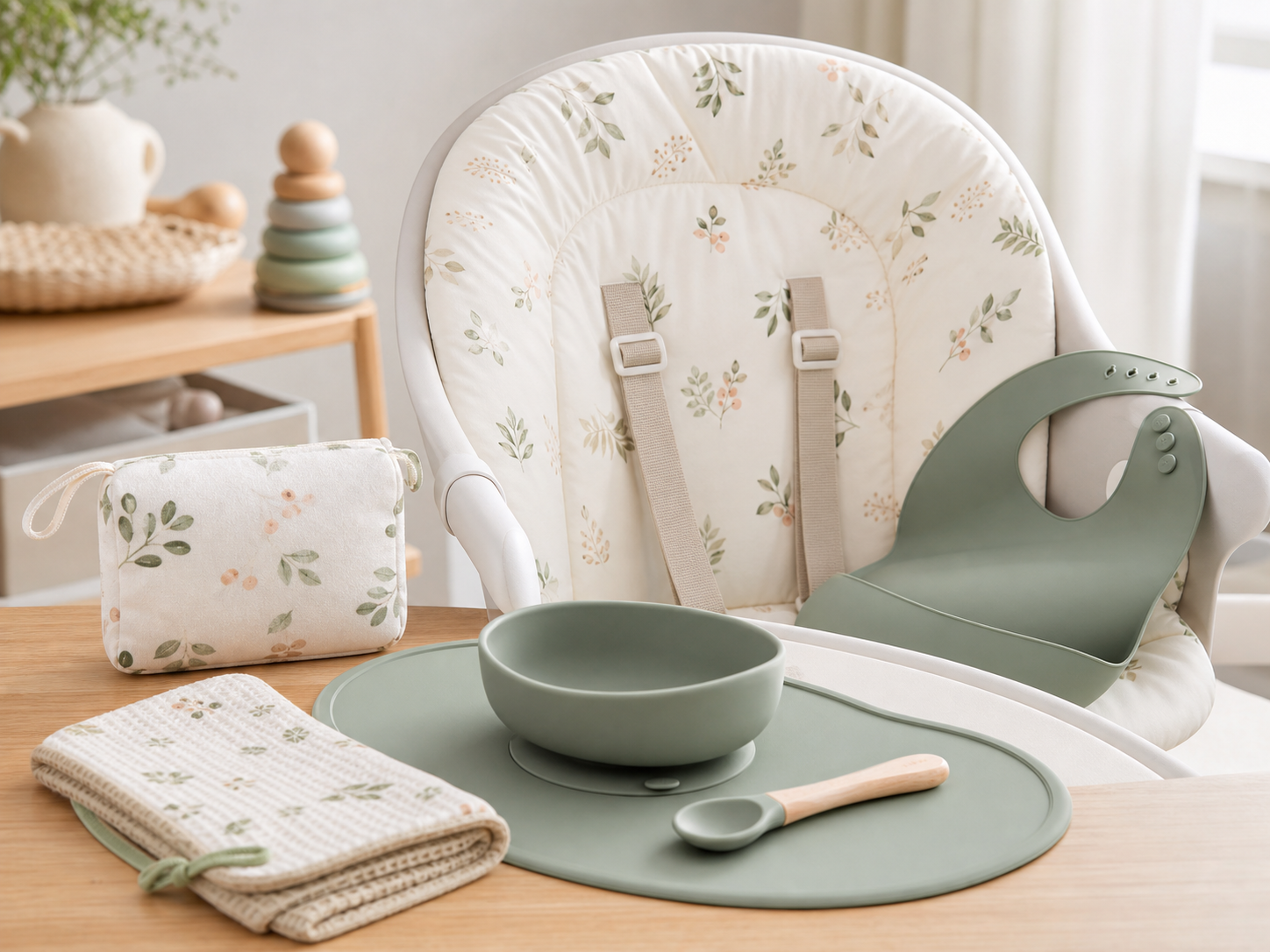
Baby tableware, placemats, teethers and small spoons may touch the mouth or food. Consumers care about food-contact safety, easy cleaning, odor, and whether the product fits the baby's current stage. For marketplaces and wholesale buyers, clearer material notes reduce pre-sale service pressure.
Six details product pages should explain
1. What the material is
State food-grade silicone, cotton, filling or printing method clearly. Do not only say safe and eco-friendly. If it is a bundle, each component needs its own material note.
2. How to clean it
Feeding products should say whether they are washable, boil-safe, dishwasher-safe or air-dry only. Textile and silicone combinations need separate care instructions.
3. Which stage it fits
Use age fit plus scenario instead of vague claims: teething stage, early solids placemat, travel bib.
4. Size and hand feel
Images should show hand scale and tableware or high-chair scale. Size is not a minor spec-sheet detail; it helps users decide whether the item is practical.
5. Bundle logic
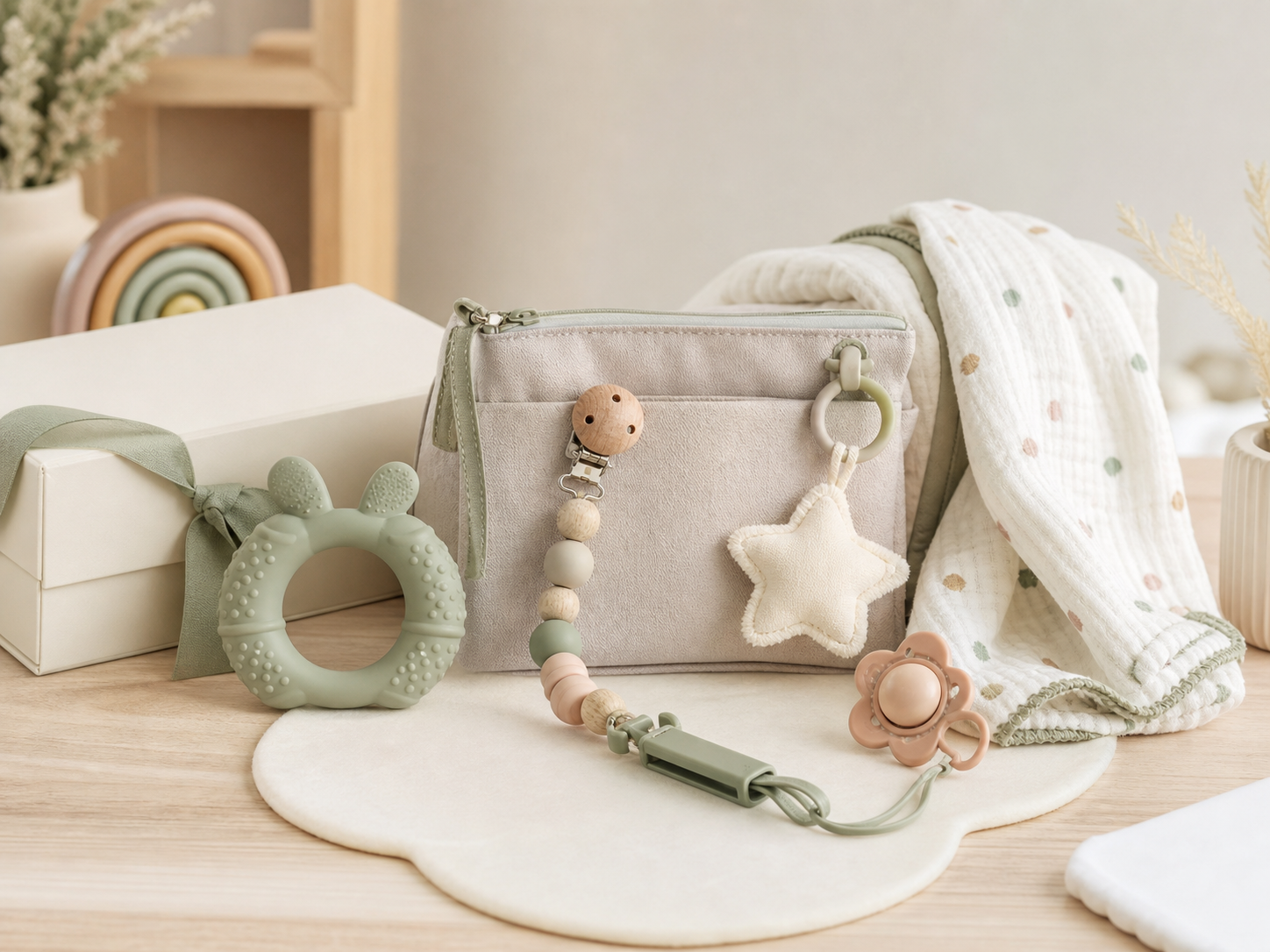
Pair placemats, bibs, teethers, pacifier clips or organizers by scenario so the product becomes a solution rather than a single consumable.
6. Certificates and packaging
For B2B buyers, keep certificate summaries, packaging language, warnings and customization options in the product file. For consumer pages, show the most important trust information without overloading the reader.
Muma recommended setup
Muma tableware can use a main product plus two small goods plus one instruction card. The main product owns the scenario, the small goods create add-on value, and the card builds trust. This works for marketplace retail and fast wholesale listing.